Pattern Design Reflection
03 Dec 2025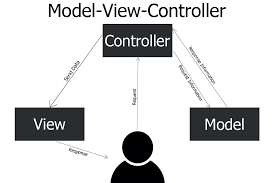
The Essence of Design
Similar to the base case in a dynamic programming problem or the structural template of a house, a design pattern is a reusable, standardized solution to a common problem. A design pattern offers a conceptual blueprint that may be modified according to the project’s requirements, as opposed to a rigid piece of code.
Certain fundamental structures are necessary for usability, clarity, and consistency in software engineering, architecture, and even physical design. For instance, almost all contemporary homes have a kitchen, a bathroom, a bedroom, water, and electricity. Without these common design components, a home would be confusing or dysfunctional.
In software, design patterns offer the same consistency. They enhance maintainability, establish expectations, and speed up developers’ comprehension of new projects. Additionally, they stop mistakes from happening again; maintaining a solid pattern builds long-term proficiency and results in systems that are cleaner and more dependable.
Run & Route Hub
My group’s final project, Run & Route Hub , employs a number of design patterns to efficiently organize our applications. But MVC (paradigm, View, and Controller) is the design paradigm that best captures the essence of our architecture.
Model
Our data’s structure is managed by the Model layer. Our PostgreSQL database tables, relationships, and the automatically produced Prisma Client are defined in our schema.prisma file. The basis for information storage and retrieval throughout the project is established by this layer.
generator client {
  provider = "prisma-client-js"
}

datasource db {
  provider = "postgresql"
  url      = env("POSTGRES_PRISMA_URL")
}

model User {
  id       Int    @id @default(autoincrement())
  email    String @unique
  password String
  role     Role   @default(USER)
}
View
Everything the user sees and engages with within our application is represented by the View. This is mainly implemented in Run & Route Hub using our Next.js pages and React components. These elements are in charge of providing data in an understandable, organized, and interactive way. For instance, information obtained from our database is visually shown by components like RouteCard, ProfileHeader, and several statistics sections.
Database operations and data logic are never handled by the View layer. Rather, it gets data via server-side rendering or from the Controller. Our codebase is kept clear by this rigorous division. We minimize needless dependencies and make it simpler to change, rethink, or scale our interface as the project progresses by keeping the View only focused on display.
Controller
The Controller serves as a bridge between the data of the program and the user’s actions. Our project’s API endpoints, which are found in app/api/.../route.ts, serve this function. When a user completes an action, like publishing a review, retrieving route information, or submitting a new run log, the Controller receives the request, processes any required logic, and interacts with the Model to retrieve or update data.
A POST call to /api/routes, for instance, verifies incoming data, formats it correctly, communicates with Prisma to add new records to the database, and finally provides a structured JSON answer. We guarantee that data processing and business processes stay centralized and consistent by putting this logic in the Controller. Throughout the application, this pattern lessens repetition and strengthens maintainability.
Conclusion
Our group’s final project uses the MVC design pattern in a useful and scalable manner by combining Models, Views, and Controllers. The Controller controls data flow and application logic via API route handlers, the View uses React and Next.js to generate dynamic and interactive interfaces, and the Model uses Prisma to organize our data structure. These elements work together to produce a simple, modular architecture that promotes long-term maintainability, clarity, and teamwork.
In addition to streamlining development, knowing and using MVC offers a foundation that complies with industry standards. This structure guarantees that every contributor may operate effectively inside a precise and well-defined framework while preparing our project for future growth.